Applications in consumer neuroscience: Decoding and neuroforecasting
Alexander Genevsky & Maarten Boksem
Rotterdam School of Management, Erasmus University
Abstract
Consumer neuroscience is an emergent field of academic research based on the foundations and principles of neuroeconomics, while maintaining a focus on real-world applications. The promise of consumer neuroscience stems from the potential of using modern neuroimaging methods to provide relevant and actionable insights into the mental processes underlying consumer and market behavior. In this chapter we provide a broad overview of the two areas of consumer neuroscience in which neuroeconomic perspectives and methods have shown the most promise. We first discuss the role of neuroimaging in the decoding of mental states and how these measures are informative for understanding consumers’ responses, experiences, and associations. We then cover neuroforecasting, the use of neural data collected from laboratory samples to forecast market-level behavior. Finally, we close the chapter with an outlook for the future of the field.
1. Introduction
Over the past decade, the field of neuroeconomics has grown to include consumer neuroscience, an area of research focused on the application of neuroscientific methods and approaches to better understand consumer and market behavior. To this end, neuroimaging methods offer an important benefit over traditional behavioral methods by providing information about underlying mental processes without the need for participants to verbally articulate their thoughts, feelings and preferences1,2. This represents a valuable opportunity for researchers and practitioners because many of the mental processes responsible for observed behavior occur below the level of conscious experience3,4. Thus, research participants are often unable, or unwilling, to accurately report their true mental states and motivations5–7. The hope is that by applying neuroscientific methodologies we can gain insights that lead to a better understanding of consumers’ mental processes, and subsequently to improved predictions of consumer behavior at the individual and aggregate levels.
From the outset, there has been enthusiasm that neuroscience would make significant impacts across a broad range of domains within consumer research1. Indeed, valuable work in the field has applied neural data to marketing relevant topics including consumer valuation8,9, branding10,11, product design and aesthetics12,13, and the integration of price information14,15 (for reviews see1,2,16–19). However, to date, we find that the most promising contributions of consumer neuroscience to business practice fall into two categories: 1) the decoding of underlying mental states in response to marketing stimuli and the associated consumer decision-making processes, and 2) the use of neural data to improve forecasts of market-level outcomes through neuroforecasting.
We begin with a discussion of the use of neural data to decode consumers’ underlying mental states. This work has applied neuroeconomic approaches to explore consumers’ emotional responses to marketing messages, the temporal experience of static and dynamic stimuli, and the assessment of consumer’s perceptions of brand associations and image. Next, we consider the field of neuroforecasting, in which neural data is used to inform forecasts of real-world market-level consumer behavior. We discuss the origins of neuroforecasting, its unique experimental approach, existing empirical evidence, and theory building efforts.
2. Decoding mental states from the brain
2.1 Decoding Emotions
An extensive stream of literature in marketing has shown that emotions play an important role in how consumers respond to marketing stimuli20,21. For example, it has been shown that advertisements high in emotional content generate more online search behavior22, that positive emotions lead to more positive attitudes to ads, products, and brands23–29, and that positive emotions lead to higher purchase intention and increased sales28,30 (see31,32 for meta-analyses).
However, measurement of these emotions is often difficult, in large part because individuals have limited access to their inner mental states4,33. Even when aware of their emotional state, people often find it difficult to accurately identify or put them into words5–7. In some cases, participants may willfully misreport their feelings for reasons of social desirability7,34,35. In addition, emotional ratings are often reported retrospectively, thus relying on how well they can be retrieved from memory. Moreover, emotions are dynamic processes, fluctuating considerably in short periods of time. Often it is precisely these fluctuations, opaque in retrospective reports, that can be of great importance for understanding the experience of a stimulus36. For these reasons it is highly beneficial to be able to measure emotions with high temporal resolution, and without requiring retrospective self-report responses.
This is where neuroscience insights and methods play an important role. Modern neuroimaging methods provide researchers with insight into affective processes by directly observing them in real-time from the consumer’s brain with relatively high temporal resolution1,2. Importantly, emotions (as with other psychological processes) are considered distributed patterns of activations in a network of neural regions across the brain37–39. For these reasons, modern neuroscience makes extensive use of machine learning and pattern recognition techniques, referred to as multivariate pattern analysis (MVPA). This analytic approach is particularly suitable for analyzing distributed patterns of brain activation and how these patterns translate into psychological processes such as emotions40–42.
In short, MVPA statistical models specify how patterns of activity across the brain combine to predict the identity or intensity of a mental process. While traditional (univariate) approaches in neuroscience are mainly focused on identifying the function of brain areas, the MVPA approach is mainly interested in identifying mental processes. This approach aligns well with the goals of consumer neuroscience researchers. For example, in marketing, one is less concerned with understanding which specific brain area is involved in a certain psychological process. Rather, the main goal is to establish which mental processes are evoked by marketing stimuli irrespective of the underlying brain network.
Over the past 15 years, several papers have demonstrated the possibility of decoding emotions from multivariate brain measurements. Researchers in affective neuroscience have found that it is possible to decode the neural substrate of discrete emotions (e.g. happiness, sadness, fear, anger and disgust) elicited by (audio)visual stimuli43–46. However, most work has been focused on investigating the neural representations of the underlying emotional dimensions of valence and arousal. A seminal study in this area47 showed that the pattern of brain activation evoked by emotional pictures could reliably predict the target emotion (see also48).
Building on these findings and applying them in a marketing context, Eijlers, Boksem and Smidts49 first classified neural activity in response to emotional pictures and subsequently used these representations to estimate the level of valence and arousal in response to advertisements. In this study, participants viewed 100 images from the IAPS image database50 and 150 print ads from various product categories and brands, while EEG activity was recorded. The researchers used this neural data to train a statistical model to differentiate high and low emotional valence and arousal as evoked by the IAPS images. Subsequently, this model was used to obtain a measure of (neural) valence and arousal evoked by an independent set of print ads. Finally, they estimated the relationship between the decoded levels of valence and arousal evoked by the print ads and external measures of ad effectiveness (as measured by notability and attitude toward the ad in an independent consumer panel). The results showed that the neural measure of arousal was positively associated with the notability of ads in the population at large, but was negatively associated with the attitude toward these ads.
Although static stimuli such as print ads are still relevant for marketing, the trend is clearly towards video and interactive media. Chan and colleagues51 tested whether affective neural representations evoked by static emotional stimuli (IAPS images) can be used to decode emotional experiences evoked by dynamic advertising stimuli (video movie trailers). In this experiment, subjects were shown IAPS images and movie trailers in the MRI scanner. A support-vector machine (SVM) classifier was trained on the fMRI data obtained while viewing the IAPS images and then tested on the movie trailer fMRI data. The results showed that patterns of activation in the brain could be used to accurately predict both the overall emotional content of the trailers, as well as the time course of the changes in both valence and arousal across the trailer. These findings provide evidence that neural affective representations extracted from episodic affective states correspond with those of more naturalistic and dynamic emotional experiences. We will further discuss the link between affect and forecasting in the section on neuroforecasting below.
2.2 Decoding the Consumer Experience
While most of the work on neural decoding, particularly where it relates to consumer behavior, has focused on emotions, the approach has broader applications. A key tool in this area is a meta-analytic database called Neurosynth52, which to date mines over 14,000 peer-reviewed neuroscientific publications for brain activation associated with a large range of concepts (e.g. ‘emotion’, ‘attention’, ‘memory’). The database provides a statistical brain map representing the relationship between the concepts and the neural activity reported across regions of the brain. By testing the similarity between patterns of brain activation elicited by (marketing) stimuli and the association maps obtained from Neurosynth it is possible to decode multiple underlying mental states simultaneously.
This is particularly relevant in consumer neuroscience because there is evidence from the marketing literature that mental states other than emotions are important for effective communication. For example, perceptual and linguistic responses53,54, memory, and attention55 have all been associated with consumer preferences. In addition, executive functions impacted by processing fluency, such as deliberation and inhibitory control, have been found to interact with brand preference. On the other hand, social cognition, encompassing psychological processes such as empathy and mentalizing, is closely related to the advertising literature on narrative transportation56.
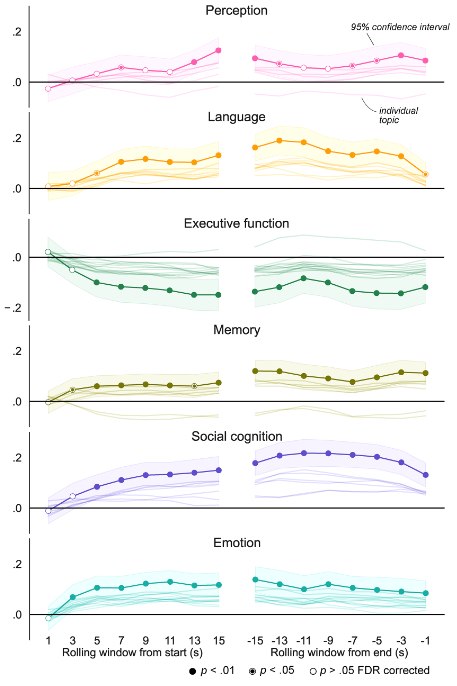
Chan and colleagues57 leveraged the power of meta-analytic decoding to investigate which mental processes were most closely associated with advertising success, and at which points during ad presentation these processes were most relevant. In their study, participants viewed ads while undergoing scanning in the MRI. Neural activity evoked by the ads was decoded using Neurosynth to capture the dynamics of the mental processes evoked by the ads. The decoded mental states were then subsequently compared to a measure of attitude towards the ad. The results showed that, in addition to emotions, a broad range of mental states were strongly associated with self-reported attitudes. Interestingly, it was observed that the temporal dynamics of these processes differed substantially (see figure 1). That is, the emotional response was found to be particularly important early on in the ad (within the first 3 seconds), but then dropped off slightly, while mental processes associated with social cognition (i.e. mentalizing) became important later in the presentation but then remained important. On the other hand, processes related to perception and executive functions (or lack thereof) were important for the closing stages of the commercial, suggesting that making consumers engage in effortful cognitive processing while viewing an ad leads to lower attitudes, confirming the long-standing observation that information complexity negatively impacts comprehension.
This work is a good example of how consumer neuroscience can provide specific recommendations for marketing in practice. Specifically, it suggests that it is important for effective ads to evoke an early emotional response, aligning with recent behavioral work indicating that consumers make up their mind about engagement within the first 10– 15 seconds58–60. In addition, these findings reveal the importance of eliciting processes associated with social cognition throughout the ad, echoing work showing that neural activity in the brain’s social cognition system tracks message virality61 and that ad liking is associated with neural activity across participants at mentalizing regions in the brain62.
2.3 Decoding (Brand) Associations
In addition to evoking mental processes through advertising and communications, a central function in marketing is to create strong and specific brand images, the mental associations of the brand in the minds of consumers63. For example, a beer brand may try to create associations between the brand and the concepts of 'young' and 'party' that conjure up images of trendy young people at a party. A breakfast cereal, on the other hand, may try to associate the brand with the concept of 'family' and an image of a loving family at the breakfast table. The extent to which these images and associations are elicited effectively and consistently in the minds of consumers is very difficult to measure. We know that most people are simply not very good at thinking about internal mental processes and often cannot express them accurately. An additional problem with asking people about brand associations is that it is difficult to determine whether the reported associations are actually retrieved from memory, or are constructed on the spot in response to the researchers' questions64. Moreover, people are more inclined to offer associations with familiar and innocuous brands like McDonalds than those with more complex social connotations like Durex65. For these reasons, directly reading mental associations from the brains of consumers offer a more reliable way of measuring these brand images.
Findings from cognitive neuroscience support the idea that imagery and perception of specific visual content might be represented in the same cortical regions and in a similar representational format. In other words, models trained on fMRI data recorded during the visual perception of stimuli can decode which of these stimuli are then imagined at a later time66–68. Indeed, the content of working memory -- what people are thinking of at any moment without relying on direct visual input -- can be decoded from the brain69,70. These findings suggest that it may indeed be possible to extract visual imagery from activity patterns within the brain, potentially allowing for brand images to be decoded from consumers’ neural responses.
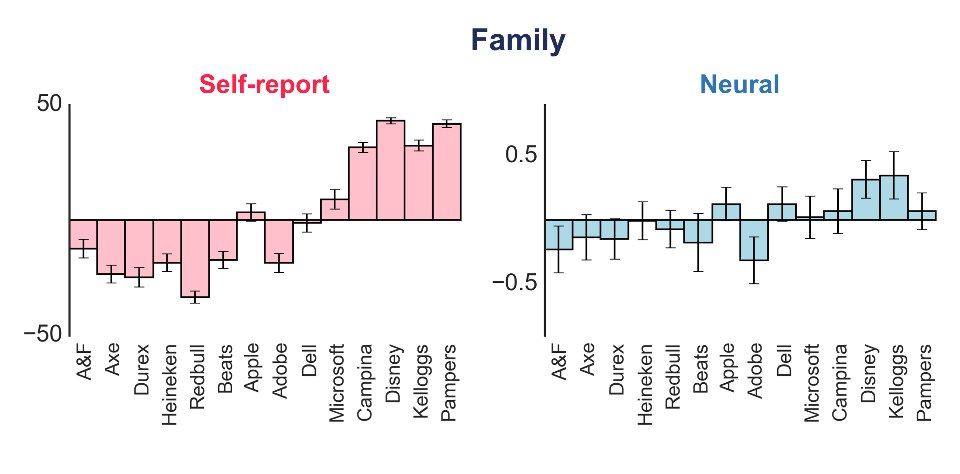
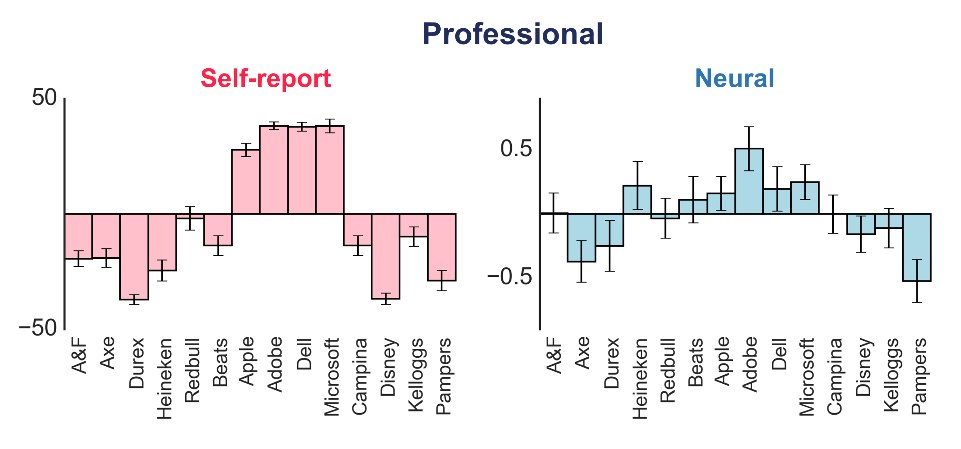
Chan, Boksem and Smidts71 tested this hypothesis by asking participants to create a mental image that best fits a number of well-known brands (e.g., Apple, Disney, Heineken, Red Bull, Kellogg's, Microsoft and Durex). They were then placed in an MRI scanner and asked to recall the mental images they constructed previously while presented with the brand logos. In addition, participants viewed a large set of photos depicting different social situations: people working in an office, partying with friends, being intimate with a romantic partner, socializing with family, etc. In order to reveal the extent to which the association with the brand (the 'brand image') resembles the images of the different social scenes, a classification model was trained on the brain activity evoked while looking at photos of these situations, and those evoked while thinking about the brands. Thus, a neural profile in terms of the similarity of each brand to the different social settings was created (see figure 2). It was observed, for example, that when participants thought about Heineken, their brain activity was similar to how the brain responds to 'party' photos, but also that Heineken was fairly strongly associated with 'work', but clearly considered less sexy than Red Bull. An additional insight from this study indicated that when the neural profiles of two brands are very similar, such as that of Apple and Beats, consumers reported that they would be more interested in co-branded product. This method could be a useful tool for marketers to predict which brand collaborations might be most successful.
A slightly different approach was taken by Chen, Nelson and Hsu72. In this study, the researchers attempted to decode the personality traits associated with brands, rather than their brand images73. As in the previous study, participants viewed the logos of different brands in the MRI scanner and were asked to freely express the associations they had with these brands. A classifier was then trained to associate the patterns of brain activity acquired while participants viewed the brand logos with the personality characteristics as measured by a brand association scale73. The results showed that personality characteristics associated with a brand can be reliably decoded from patterns of brain activity.
2.4 Interim Summary
In this section, we have presented an overview of how contemporary methods from neuroscience provide a unique opportunity to capture measures of psychological processes, including emotions and mental associations, that are highly relevant for marketing. As reviewed above, there is growing evidence that mental states and mental associations can indeed be decoded from the brain and provide valuable insights for researchers and practitioners interested in understanding associations and mental states evoked in consumers by marketing stimuli.
3. Neuroforecasting
The decoding of mental states has proven valuable for exploring the processes underlying individual consumer decision-making. In practice, however, the value of understanding the motivations driving consumer behavior largely rests on its ability to inform managerial decision making and improve predictions at the aggregate level. In this section we address the application of neuroeconomic methods to the forecasting of real-world market-level outcomes, a recently established and quickly growing field of research called neuroforecasting.
Previous research in neuroeconomics, much of which has been covered in earlier chapters, has demonstrated that neural activity in specific brain areas can track decision-making processes and predict behavior, even before a conscious choice is made. This foundational work has paved the way for neuroforecasting, which aims to predict aggregate-level behavior, such as market or population trends, based on neural data collected in the laboratory. Unlike traditional methods that focus on individual choices, neuroforecasting uses data from a small sample to forecast the behavior of much larger groups, at the market, or even population levels.
In the following sections, we begin by addressing the key elements of neuroforecasting research and empirical design. We then review the foundational neuroforecasting studies, exploring their methodological and theoretical contributions and placing them within the broader context of consumer research. We do not delve into the fine details of each study, as there are a number of comprehensive reviews available for that purpose74–77. We end with a discussion of ongoing work aimed at understanding the mechanisms, optimization, and boundary conditions that define neuroforecasting in practice.
3.1 Empirical approach
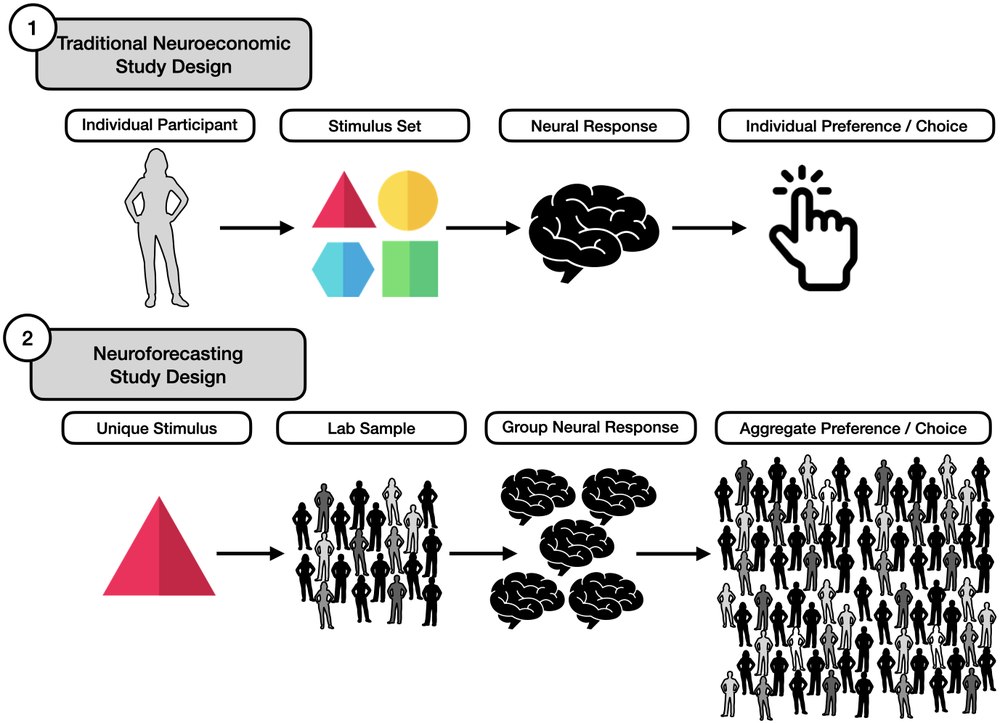
Neuroforecasting research, which aims to predict behaviors at the aggerate rather than individual level, necessitates a different empirical approach than utilized in traditional neuroeconomic studies. Typically, in psychology and neuroeconomics, data analysis focuses on individual-level predictions. In these contexts, data collected from an individual (neural and behavioral) are used to predict that individual’s preferences and behavior. Thus, in these experimental designs the independent and dependent variables are elicited from the same source. Alternatively, in neuroforecasting, the unit of analysis shifts from the individual (or sample) to the stimulus itself. The goal now is to understand and predict the broader impact of the stimulus at the aggregate level, rather than any individual response. The focus no longer lies on how differences in neural responses to a set of stimuli within an individual predict their relative preferences or choice, but rather, how shared responses across individuals to unique stimuli forecast their real-world, market-level outcomes (see figure 3).
An important consequence of this empirical approach is that it requires aggregate-level dependent variables that serve as the targets of our forecasts. Whereas traditional neuroeconomic experiments may rely on preference and choice data collected in the laboratory, neuroforecasting studies require access to market-level data. These data often represent a significant challenge for researchers. In many cases, market data are difficult to obtain and less controlled than traditional in-laboratory stimuli. Market outcome data collected by private firms, such as information about customers, sales figures, and online engagement metrics, are often highly proprietary and rarely shared outside of the company for competitive and legal reasons. Even when market data is available, one must carefully consider the numerous exogenous influences that impact their outcomes. For example, differences in promotional activities, communications, and availability might account for variance in real-world sales outcomes, but are presumably not associated with the neuropsychological processes driving choice that researchers are most interested in identifying and leveraging.
3.2 Primary findings in the field
Although the term "neuroforecasting" wasn't coined until 201876, the roots of the field can be traced back to a 2012 study by Berns and Moore on the forecasting of music preferences78.The authors used data collected previously in a study on social influence in which adolescents underwent fMRI while listening to unfamiliar songs. Years later, once market-level success of the songs became available, the neural and behavioral data was re-analyzed. The authors discovered that participants’ self-reported preferences did not predict market success, but neural activity in the nucleus accumbens (NAcc) did. This work represents the first application of neural data to the forecasting of market-level outcomes.
This work was followed by focused efforts to explore the use of neural data for aggregate-level forecasts across a variety of domains. Falk, Berkman, and Lieberman79 applied neuroforecasting in the public health domain, evaluating the effectiveness of neural responses to forecast the success of smoking cessation advertisements. They found that neural activity collected as participants viewed anti-smoking ads in the scanner predicted the volume of calls to smoking cessation hotlines better than self-reported effectiveness scores.
Genevsky and Knutson80 further expanded the application of neuroforecasting to prosocial behavior in a study of online microlending. In this study, participants in the fMRI scanner were presented with real microloan requests selected from a large online microloan platform. Initially, the goal of the study was to assess which features of loan requests most effectively elicited giving behavior from individual lenders. However, having access to the real-world outcomes for these loan requests, the authors went on to forecast their relative success or failure on the internet. Using the laboratory participants’ self-report ratings, observed lending behavior, and fMRI data, they found that neural responses to loan requests (specifically in the NAcc) significantly improved forecasts of the funding success of the loans. Further, the neural forecasts outperformed those based on the participants' subjective ratings and donation behavior.
Together, these studies demonstrated that the inclusion of neural data could indeed improve aggregate-level forecasts and highlighted the potential social and economic impact of even modest improvements in forecasting accuracy. Importantly, Venkatraman and colleagues81 validated the use of neuroforecasting by comparing the predictive value of various traditional, neural, and physiological measures, including consumer surveys, psychological surveys, eye tracking, biometric measures (e.g., heart rate, respiration, skin response), EEG, and fMRI. They found that of the metrics they collected, only their fMRI metric significantly improved forecasts beyond traditional surveys responses. This work underscores the value of neuroscientific methods to augment established methods for the prediction of consumer behavior, and suggests that brain imaging data may represent a unique source of predictive information.
Genevsky, Yoon and Knutson82 went on to apply neuroforecasting to predictions of crowdfunding campaigns. While in the scanner, participants were presented with crowdfunding projects from kickstarter.com and asked to choose which they would prefer to contribute to. Because these campaigns were newly listed, their final real-world outcomes were not known to the researchers at the time of data collection. Once the funding window for all of the projects on the website had closed, the authors assessed which laboratory measures, either behavioral or neural, best forecasted project success or failure. They found that while activity in several neural regions were associated with individual funding choices, only activity in the NAcc effectively predicted the real-world crowdfunding campaign success more accurately than behavioral measures.
Over the last ten years, the applicability of neuroforecasting has been demonstrated across a diverse range of market relevant domains. Kühn, Strelow and Gallinat83 tested neuroforecasting's application in retail marketing in a study on the impact of supermarket advertisements on chocolate sales, finding neural responses to ads and products predicted sales better than subjective ratings. In a pair of studies, Scholz et al.61 and Dore et al.84 showed that neural activity in reward-related brain regions predicted the sharing volume of New York Times articles better than article features or self-reported sharing intentions. Tong et al.60 then extended neuroforecasting to “attention markets” utilizing the engagement metrics of YouTube videos and demonstrating that neural activity, rather than self-reported viewing preferences, predicted real-world video engagement on the internet. Indeed, there is even emerging evidence that neural activity in the NAcc might hold predictive information regarding large-scale equity investment markets85,86: In separate studies by Stallen, Borg, and Knutson74, and Van Brussel, Boksem and Smidts86, activity in the NAcc of amateur and professional investors were better predictors of stock performance than investor choices or self-report measures.
Despite the early predominance of fMRI studies in the neuroforecasting literature, the relative affordability and accessibility of EGG has gained popularity in the field. In particular, the practical and logistical advantages of EEG have led to its widespread use in industry, particularly in private neuromarketing firms. Unlike fMRI studies, which typically emphasize spatially isolated neural activity in forecasting analyses, EEG studies often utilize alternative methods based on the increased temporal and spectral resolution of EEG data. For example, Boksem and Smidts87 applied spectral decomposition of participants' neural responses (the analysis of neural frequencies) to film trailers to predict the commercial success of movies. They found that particularly oscillations in the gamma range (>30Hz) were predictive of the box office revenue for the movies, and that gamma improved these predictions beyond self-report measures. Guixeres and colleagues88 combined various EEG metrics to predict Super Bowl advertisement engagement, finding brain asymmetry in specific frequency ranges was the best predictor of YouTube views. Finally, Hakim et al.89 used EEG data to improve forecasting accuracy of consumer responses towards commercials.
Dmochowski et al.90 used Inter-Subject Correlations (ISC) to analyze the synchronization of neural activity across participants and found that correlated EEG activity while viewing television programs predicted real-world viewership and social media activity. Barnett and Cerf91 used a similar approach with movie trailers, finding that EEG data collected from viewers in theaters predicted box office success better than traditional ratings. Neural synchrony has also been found to contain predictive information regarding popularity on streaming music platforms92, and out-of-sample preferences for video stimuli62.
3.3 Understanding neuroforecasting
This body of research provides substantial evidence for the ability of neural data to improve forecasts of real-world market-level outcomes of interest to researchers and practitioners. However, a significant question remains regarding the mechanism that might explain the effectiveness of neurally derived predictions. How is it possible that neural data collected from a relatively small laboratory sample can significantly improve behavioral forecasts of market-level outcomes? Further, how can we understand results indicating that in some cases, forecasts based on the neural responses of laboratory respondents out-perform forecasts based on the self-reported preference and observed behavior from those same individuals?
A first clue can be found in the Genevsky et al. (2017) neuroforecasting paper on crowdfunding82. The authors find that neural activity in both primary affect (NAcc) and value integration (medial prefrontal cortex, MPFC) regions predicted individual funding decisions, but only activity in the NAcc scaled to effectively forecast aggregate outcomes. Subsequently, Knutson and Genevsky76 proposed that while various neural processes contribute to decision-making at the individual level, only a specific subset of these processes may remain relevant for predicting aggregate behavior. They argue that individual choice is a function of both primary affective responses, which are more widely shared across people, and deliberative processes which are more idiosyncratic to the individual. Thus, self-report and choice data collected at the individual level are a combination of both generalizable and idiosyncratic component processes. In neuroforecasting, where the aim is to forecast aggregate-level variables, the shared components of choice offer the most valuable and predictive source of information. On the other hand, while more idiosyncratic deliberative processes may account for the consistency and reliability in choice behavior within an individual, they represent unsystematic noise at the aggregate level.
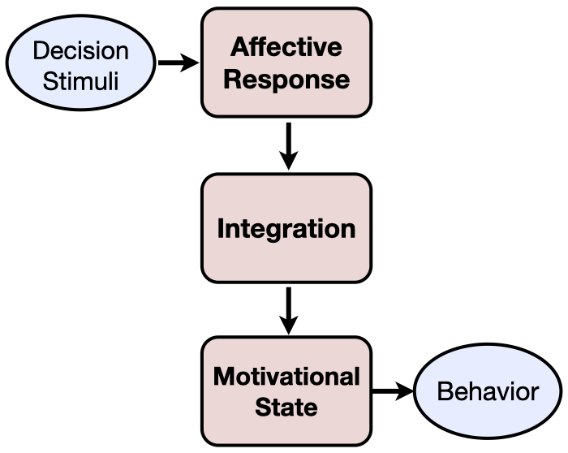
Previous work in neuroeconomics provides some hypotheses regarding which components of the decision-making process might generalize best across individuals to subsequently account for aggregate level behavior. In particular, the Affect Integration Motivation (AIM) framework93 offers a useful framework through which to study neuroforecasting (see figure 4). The AIM framework suggests that choice stimuli initially evoke affective responses (either positive or negative) activating subcortical and cortical regions including the NAcc and Anterior Insula. This initial response is then further integrated through deliberative and reflective cognitive processes unique to the individual. Finally, the integrated representation generates a motivational state, to approach or avoid the stimulus, which subsequently manifests as self-report and observable behavior. This framework suggests that initial affective responses to choice options (e.g., NAcc activity) may represent a more universally shared component of the decision-making process than later integrative neural responses (e.g., associated MPFC activity). Further, self-report and choice behavior then include both generalizable and idiosyncratic components of choice. As a result, forecasts based on only the more generalizable choice components indexed by primary affective responses in the brain may result in increased forecasting accuracy. Conversely, forecasts containing idiosyncratic components, including self-reported and choice, may result in decreased accuracy due to the addition of non-generalizable noise into aggregate forecasts. In a test of this hypotheses, Genevsky and colleagues94 found that neural activity associated with early affective processing was more widely shared across individuals than later integrative or deliberative processes, and subsequently led to improved forecasts of aggregate behavior.
3.4 Open questions and future directions in Neuroforecasting
In addition to the exploration of an underlying mechanism discussed above, many open questions in neuroforecasting revolve around issues of optimization and boundary conditions. Taking into account both theoretical and practical considerations, it becomes important that we understand when neural data may be most informative, and thus cost-effective to collect, and when it might not. For example, does neuroforecasting work equally well across contexts and choice domains? Based on the findings reviewed above, with a few notable exceptions, neural forecasts have been most broadly supported by generalizable neural activity associated with affective processes. This suggests that forecasts of consumer decisions in domains that heavily involve affective considerations, such as those related to hedonic and experiential products, might benefit most from neural data. However, it must be noted that in the existing neuroforecasting literature, studies of affectively oriented decisions are over-represented, and thus may have led to findings specific to these domains. Whether or not neuroforecasting can be equally effective for forecasting outcomes in markets with more deliberative considerations is a topic of ongoing research.
There are also important open questions regarding the optimization of empirical approaches in neuroforecasting research (i.e., experimental designs and analysis methods). The initial set of neuroforecasting experiments reviewed above are almost exclusively characterized by efforts to forecasts which stimuli within a set will perform better or worse at the aggregate level. Little work has explored how to optimize forecasting accuracy using different experimental designs, stimulus selection criteria, identification of critical stimulus features, and which tasks participants should perform while in the scanner. To date, empirical design choices have largely been based on existing paradigms from other neuroeconomic disciplines, not necessarily constructed to optimize the generalizable neural responses critical for neuroforecasting. Better understanding regarding how to conduct neuroforecasting research most efficiently and effectively represent a promising direction for future research and would offer substantial benefits for researchers and practitioners interested in addressing the scope of neuroforecasting’s potential to inform real-world market decision making.
Questions also remain regarding the relationship between the experimental sample and the aggregate market of interest. Does the effectiveness of neuroforecasting rely on the similarity between the sample and market? Using two independent neuroforecasting datasets, Genevsky and colleagues94 found that the accuracy of market forecasts derived from neural data were less impacted by the representativeness of the sample to the market than forecasts based on behavioural data. This suggests that neural activity capturing generalizable components of affect and value processing in the brain may represent a more universal index of preference across individuals compared to observed behaviour and self-report measures.
Finally, while we have seen that multivariate pattern analysis has been pivotal in decoding consumer mental states, work on neuroforecasting has predominantly relied on univariate analysis approaches. However, in a recent study by Chan et al.57, a first step has been made to combine the decoding of mental states with neuroforecasting. The authors found that patterns of neural activity, particularly those associated with social-affective responses, improved the prediction of out-of-sample liking ratings for advertisements compared with traditional anatomically based neuroimaging measures and self-report measures. These findings align well with predictions derived from the AIM framework (see figure 4); that (social) affective processes may account for the ability of brain measures to forecast market-level behavior. The use of more nuanced approaches to neural analyses, as in this example, will become increasingly important as the field of neuroforecasting continues to grow and develop.
4. Conclusion
Over the past decade, the application of neuroeconomic approaches to business-relevant questions has propelled the development of the field of consumer neuroscience. This area of research is committed to applying the lessons and methods from the disciplines of neuroscience and neuroeconomics to better understand and predict consumer psychology and decision-making. While we remain optimistic about the potential for consumer neuroscience to contribute across a broad range of domains, reflection on the last 10 years of work indicate the greatest contributions have come from research on the decoding of consumer metal states and the forecasting of market-level outcomes.
The temporal resolution and real-time nature of neuroimaging methods have removed the limitations of black-box models of consumer behavior, in which we only have access to stimulus inputs and resulting behavior. Using neural data related to psychological processes, researchers are able to decode emotions, consumer experiences, and brand associations. These methods have opened new avenues of research on consumer responses to marketing stimuli and their resulting decision-making process. In particular multivariate analysis methods have proven particularly useful for the decoding and prediction of emotional and cognitive states. The ability to record brain responses in real time, unobtrusively, without requiring overt responses from participants that may interfere with ongoing mental processes, gives consumer neuroscience a unique advantage in providing insights on the experiences and cognitions underlying consumer behavior that are critical for the development of effective business strategies.
Finally, the evolving field of neuroforecasting has extended the applications of consumer neuroscience beyond the individual (or sample). A growing body of research has demonstrated the effectiveness of neural data to improve forecasts of real-world market-level outcomes across a wide range of product domains and consumer contexts. This work has shown that the brain responses of laboratory samples, primarily in affective and value-based neural circuits, holds hidden information capable of improving the accuracy of predictions of aggregate-level preference and behavioral outcomes. As the field continues to develop, ongoing work must focus on optimizing empirical designs, establishing boundary conditions, and exploring generalizability across product and consumer domains. In addition, neuroforecasting research on the generalizability of individual decision-making processes to aggregate-level behavior may contribute to the neuroeconomic literatures on affect and value-based decision-making.
In summary, the application of neuroeconomics in the form of consumer neuroscience has made significant contributions over the last decade. Still a nascent field, the continued integration of basic neuroscientific approaches to business-relevant research questions represents a promising direction. In particular, the use of neural metrics for the decoding of mental processes and the forecasting of market behavior offers the potential for improved communications, more effective intervention strategies, and better informed strategic decision-making in business and public policy.
5. References
- Plassmann, H., Venkatraman, V., Huettel, S. & Yoon, C. Consumer Neuroscience: Applications, Challenges, and Possible Solutions. J Marketing Res 52, 427–435 (2015).
- Smidts, A. et al. Advancing consumer neuroscience. Market Lett 25, 257–267 (2014).
- Dijksterhuis, A. Think Different: The Merits of Unconscious Thought in Preference Development and Decision Making. J Pers Soc Psychol 87, 586–598 (2004).
- Winkielman, P. & Berridge, K. C. Unconscious Emotion. Curr Dir Psychol Sci 13, 120–123 (2004).
- Nisbett, R. E. & Wilson, T. D. Telling more than we can know: Verbal reports on mental processes. Psychol Rev 84, 231–259 (1977).
- Wiles, J. A. & Cornwell, T. B. A Review of Methods Utilized in Measuring Affect, Feelings, and Emotion in Advertising. Curr Issues Res Advert 13, 241–275 (2012).
- Fisher, R. J. Social Desirability Bias and the Validity of Indirect Questioning. J Consum Res 20, 303 (1993).
- Plassmann, H., O’Doherty, J., Shiv, B. & Rangel, A. Marketing actions can modulate neural representations of experienced pleasantness. Proc National Acad Sci 105, 1050–1054 (2008).
- Levy, I., Lazzaro, S. C., Rutledge, R. B. & Glimcher, P. W. Choice from Non-Choice: Predicting Consumer Preferences from Blood Oxygenation Level-Dependent Signals Obtained during Passive Viewing. J Neurosci 31, 118–125 (2011).
- McClure, S. M. et al. Neural Correlates of Behavioral Preference for Culturally Familiar Drinks. Neuron 44, 379–387 (2004).
- Yoon, C., Gutchess, A. H., Feinberg, F. & Polk, T. A. A Functional Magnetic Resonance Imaging Study of Neural Dissociations between Brand and Person Judgments. J. Consum. Res. 33, 31–40 (2006).
- Reimann, M., Zaichkowsky, J., Neuhaus, C., Bender, T. & Weber, B. Aesthetic package design: A behavioral, neural, and psychological investigation. J Consum Psychol 20, 431–441 (2010).
- Laan, L. N. V. der, Ridder, D. T. D. D., Viergever, M. A. & Smeets, P. A. M. Appearance Matters: Neural Correlates of Food Choice and Packaging Aesthetics. Plos One 7, e41738 (2012).
- Karmarkar, U. R., Shiv, B. & Knutson, B. Cost Conscious? The Neural and Behavioral Impact of Price Primacy on Decision Making. J Marketing Res 52, 467–481 (2015).
- Plassmann, H., O’Doherty, J. & Rangel, A. Orbitofrontal Cortex Encodes Willingness to Pay in Everyday Economic Transactions. J Neurosci 27, 9984–9988 (2007).
- Clithero, J. A., Karmarkar, U. R., Nave, G. & Plassmann, H. Reconsidering the path for neural and physiological methods in consumer psychology. J. Consum. Psychol. (2023) doi:10.1002/jcpy.1397.
- Levallois, C., Smidts, A. & Wouters, P. The emergence of neuromarketing investigated through online public communications (2002–2008). Bus Hist 63, 1–40 (2019).
- Karmarkar, U. R. & Yoon, C. Consumer neuroscience: advances in understanding consumer psychology. Curr Opin Psychology 10, 160–165 (2016).
- Ariely, D. & Berns, G. S. Neuromarketing: the hope and hype of neuroimaging in business. Nat Rev Neurosci 11, 284–292 (2010).
- Vakratsas, D. & Ambler, T. How Advertising Works: What Do We Really Know? J Marketing 63, 26–43 (1999).
- Bagozzi, R. P., Gopinath, M. & Nyer, P. U. The role of emotions in marketing. J Acad Market Sci 27, 184 (1999).
- Guitart, I. A. & Stremersch, S. The Impact of Informational and Emotional Television Ad Content on Online Search and Sales. J Marketing Res 58, 299–320 (2021).
- Burke, M. C. & Edell, J. A. The Impact of Feelings on Ad-Based Affect and Cognition. J Marketing Res 26, 69–83 (1989).
- Derbaix, C. M. The Impact of Affective Reactions on Attitudes toward the Advertisement and the Brand: A Step toward Ecological Validity. J Marketing Res 32, 470–479 (1995).
- Pham, M. T., Geuens, M. & Pelsmacker, P. D. The influence of ad-evoked feelings on brand evaluations: Empirical generalizations from consumer responses to more than 1000 TV commercials. Int J Res Mark 30, 383–394 (2013).
- Holbrook, M. B. & Batra, R. Assessing the Role of Emotions as Mediators of Consumer Responses to Advertising. J Consum Res 14, 404 (1987).
- Pelsmacker, P. D. & Geuens, M. The advertising effectiveness of different levels of intensity of humour and warmth and the moderating role of top of mind awareness and degree of product use. J Mark Commun 5, 113–129 (1999).
- Morris, J. D., Woo, C., Geason, J. A. & Kim, J. The Power of Affect: Predicting Intention. J Advertising Res 42, 7–17 (2002).
- Yeung, C. W. M. & Wyer, R. S. Affect, Appraisal, and Consumer Judgment. J Consum Res 31, 412–424 (2004).
- Binet, L. & Field, P. Empirical Generalizations about Advertising Campaign Success. J Advertising Res 49, 130–133 (2009).
- Kranzbühler, A.-M., Zerres, A., Kleijnen, M. H. P. & Verlegh, P. W. J. Beyond valence: a meta-analysis of discrete emotions in firm-customer encounters. J Acad Market Sci 48, 478–498 (2020).
- Puccinelli, N. M., Grewal, D., Motyka, S., Andrzejewski, S. A. & Avnet, T. Effects of affect on consumer behavior: a meta-analytic integration. Marketing Science Institute Working Paper Series Report No. 16, (2016).
- Zajonc, R. B. Feeling and thinking: Preferences need no inferences. Am Psychol 35, 151–175 (1980).
- Arnold, H. J. & Feldman, D. C. Social Desirability Response Bias in Self-Report Choice Situations. Acad Manage J 24, 377–385 (1981).
- King, M. F. & Bruner, G. C. Social desirability bias: A neglected aspect of validity testing. Psychol Market 17, 79–103 (2000).
- Do, A. M., Rupert, A. V. & Wolford, G. Evaluations of pleasurable experiences: The peak-end rule. Psychon B Rev 15, 96–98 (2008).
- Wager, T. D. et al. A Bayesian Model of Category-Specific Emotional Brain Responses. Plos Comput Biol 11, e1004066 (2015).
- Kragel, P. A. & LaBar, K. S. Decoding the Nature of Emotion in the Brain. Trends Cogn Sci 20, 444–455 (2016).
- Nummenmaa, L. & Saarimäki, H. Emotions as discrete patterns of systemic activity. Neurosci Lett 693, 3–8 (2019).
- Norman, K. A., Polyn, S. M., Detre, G. J. & Haxby, J. V. Beyond mind-reading: multi-voxel pattern analysis of fMRI data. Trends Cogn Sci 10, 424–430 (2006).
- Kragel, P. A., Koban, L., Barrett, L. F. & Wager, T. D. Representation, Pattern Information, and Brain Signatures: From Neurons to Neuroimaging. Neuron 99, 257–273 (2018).
- Poldrack, R. A. Inferring Mental States from Neuroimaging Data: From Reverse Inference to Large-Scale Decoding. Neuron 72, 692–697 (2011).
- Kassam, K. S., Markey, A. R., Cherkassky, V. L., Loewenstein, G. & Just, M. A. Identifying Emotions on the Basis of Neural Activation. Plos One 8, e66032 (2013).
- Saarimäki, H. et al. Discrete Neural Signatures of Basic Emotions. Cereb Cortex 26, 2563–2573 (2016).
- Kragel, P. A., Knodt, A. R., Hariri, A. R. & LaBar, K. S. Decoding Spontaneous Emotional States in the Human Brain. Plos Biol 14, e2000106 (2016).
- Eijlers, E., Smidts, A. & Boksem, M. A. S. Implicit measurement of emotional experience and its dynamics. Plos One 14, e0211496 (2019).
- Baucom, L. B., Wedell, D. H., Wang, J., Blitzer, D. N. & Shinkareva, S. V. Decoding the neural representation of affective states. Neuroimage 59, 718–727 (2012).
- Chang, L. J., Gianaros, P. J., Manuck, S. B., Krishnan, A. & Wager, T. D. A Sensitive and Specific Neural Signature for Picture-Induced Negative Affect. Plos Biol 13, e1002180 (2015).
- Eijlers, E., Boksem, M. A. S. & Smidts, A. Measuring Neural Arousal for Advertisements and Its Relationship With Advertising Success. Front Neurosci-switz 14, 736 (2020).
- Lench, H. C., Flores, S. A. & Bench, S. W. Discrete Emotions Predict Changes in Cognition, Judgment, Experience, Behavior, and Physiology: A Meta-Analysis of Experimental Emotion Elicitations. Psychol Bull 137, 834–855 (2011).
- Chan, H.-Y., Smidts, A., Schoots, V. C., Sanfey, A. G. & Boksem, M. A. S. Decoding dynamic affective responses to naturalistic videos with shared neural patterns. Neuroimage 216, 116618 (2020).
- Yarkoni, T., Poldrack, R. A., Nichols, T. E., Essen, D. C. V. & Wager, T. D. Large-scale automated synthesis of human functional neuroimaging data. Nat. Methods 8, 665–670 (2011).
- Shimojo, S., Simion, C., Shimojo, E. & Scheier, C. Gaze bias both reflects and influences preference. Nat Neurosci 6, 1317–1322 (2003).
- Schmälzle, R., Häcker, F. E. K., Honey, C. J. & Hasson, U. Engaged listeners: shared neural processing of powerful political speeches. Soc. Cogn. Affect. Neurosci. 10, 1137–1143 (2015).
- Kardes, F. R. & Kalyanaram, G. Order-of-Entry Effects on Consumer Memory and Judgment: An Information Integration Perspective. J. Mark. Res. 29, 343–357 (1992).
- Laer, T. van, Ruyter, K. de, Visconti, L. M. & Wetzels, M. The Extended Transportation-Imagery Model: A Meta-Analysis of the Antecedents and Consequences of Consumers’ Narrative Transportation. J. Consum. Res. 40, 797–817 (2014).
- Chan, H.-Y. et al. Neural Signals of Video Advertisement Liking: Insights into Psychological Processes and Their Temporal Dynamics. J. Mark. Res. (2023) doi:10.1177/00222437231194319.
- Chiong, K. X., Shum, M., Webb, R. & Chen, R. Combining Choice and Response Time Data: A Drift-Diffusion Model of Mobile Advertisements. Manag. Sci. 70, 1238–1257 (2024).
- Teixeira, T., Wedel, M. & Pieters, R. Emotion-Induced Engagement in Internet Video Advertisements. J. Mark. Res. 49, 144–159 (2012).
- Tong, L. C., Acikalin, M. Y., Genevsky, A., Shiv, B. & Knutson, B. Brain activity forecasts video engagement in an internet attention market. Proc National Acad Sci 117, 6936–6941 (2020).
- Scholz, C. et al. A neural model of valuation and information virality. Proc National Acad Sci 114, 2881–2886 (2017).
- Chan, H.-Y., Smidts, A., Schoots, V. C., Dietvorst, R. C. & Boksem, M. A. S. Neural similarity at temporal lobe and cerebellum predicts out-of-sample preference and recall for video stimuli. Neuroimage 197, 391–401 (2019).
- Keller, K. L. Conceptualizing, Measuring, and Managing Customer-Based Brand Equity. J Marketing 57, 1–22 (1993).
- Johar, G. V., Maheswaran, D. & Peracchio, L. A. MAP ping the Frontiers: Theoretical Advances in Consumer Research on M emory, A ffect, and P ersuasion. J Consum Res 33, 139–149 (2006).
- Zaltman, G. & Coulter, R. H. Seeing the Voice of the Customer: Metaphor-Based Advertising Research. JOURNAL OF ADVERTISING RESEARCH 35, 35–51 (1995).
- Lee, S.-H., Kravitz, D. J. & Baker, C. I. Disentangling visual imagery and perception of real-world objects. Neuroimage 59, 4064–4073 (2012).
- Cichy, R. M., Heinzle, J. & Haynes, J.-D. Imagery and Perception Share Cortical Representations of Content and Location. Cereb Cortex 22, 372–380 (2012).
- Thirion, B. et al. Inverse retinotopy: Inferring the visual content of images from brain activation patterns. Neuroimage 33, 1104–1116 (2006).
- Lewis-Peacock, J. A. & Postle, B. R. Temporary Activation of Long-Term Memory Supports Working Memory. J Neurosci 28, 8765–8771 (2008).
- Polyn, S. M., Natu, V. S., Cohen, J. D. & Norman, K. A. Category-Specific Cortical Activity Precedes Retrieval During Memory Search. Science 310, 1963–1966 (2005).
- Chan, H.-Y., Boksem, M. & Smidts, A. Neural Profiling of Brands: Mapping Brand Image in Consumers’ Brains with Visual Templates. J Marketing Res 55, 600–615 (2018).
- Chen, Y.-P., Nelson, L. D. & Hsu, M. From “Where” to “What”: Distributed Representations of Brand Associations in the Human Brain. J Marketing Res 52, 453–466 (2015).
- Aaker, J. L. Dimensions of Brand Personality. J Marketing Res 34, 347–356 (1997).
- Hakim, A. & Levy, D. J. A gateway to consumers’ minds: Achievements, caveats, and prospects of electroencephalography‐based prediction in neuromarketing. Wiley Interdiscip Rev Cognitive Sci 10, e1485 (2019).
- Genevsky, A. & Yoon, C. Neural basis of consumer decision making and neuroforecasting. in APA handbook of consumer psychology (eds. Kahle, . R., Lowrey, T. M. & Huber, & J.) 621–635 (American Psychological Association, 2022). doi:10.1037/0000262-027.
- Knutson, B. & Genevsky, A. Neuroforecasting Aggregate Choice. Curr Dir Psychol Sci 27, 110–115 (2018).
- Yao, X. & Wang, Y. Using neural data to forecast aggregate consumer behavior in neuromarketing: Theory, metrics, progress, and outlook. J. Consum. Behav. (2024) doi:10.1002/cb.2324.
- Berns, G. S. & Moore, S. E. A neural predictor of cultural popularity. J Consum Psychol 22, 154–160 (2012).
- Falk, E. B., Berkman, E. T. & Lieberman, M. D. From Neural Responses to Population Behavior. Psychol Sci 23, 439–445 (2012).
- Genevsky, A. & Knutson, B. Neural Affective Mechanisms Predict Market-Level Microlending. Psychol Sci 26, 1411–1422 (2015).
- Venkatraman, V. et al. Predicting Advertising Success Beyond Traditional Measures: New Insights from Neurophysiological Methods and Market Response Modeling. J Marketing Res 52, 436–452 (2015).
- Genevsky, A., Yoon, C. & Knutson, B. When Brain Beats Behavior: Neuroforecasting Crowdfunding Outcomes. J Neurosci 37, 8625–8634 (2017).
- Kühn, S., Strelow, E. & Gallinat, J. Multiple “buy buttons” in the brain: Forecasting chocolate sales at point-of-sale based on functional brain activation using fMRI. NeuroImage 136, 122–128 (2016).
- Doré, B. P. et al. Brain Activity Tracks Population Information Sharing by Capturing Consensus Judgments of Value. Cereb. Cortex 29, 3102–3110 (2019).
- Stallen, M., Borg, N. & Knutson, B. Brain activity foreshadows stock price dynamics. J Neurosci 41, JN-RM-1727-20 (2021).
- Brussel, L. D. van, Boksem, M. A. S., Dietvorst, R. C. & Smidts, A. Brain activity of professional investors signals future stock performance. Proc. Natl. Acad. Sci. 121, e2307982121 (2024).
- Boksem, M. A. S. & Smidts, A. Brain Responses to Movie Trailers Predict Individual Preferences for Movies and Their Population-Wide Commercial Success. J Marketing Res 52, 482–492 (2015).
- Guixeres, J. et al. Consumer Neuroscience-Based Metrics Predict Recall, Liking and Viewing Rates in Online Advertising. Front Psychol 8, 1808 (2017).
- Hakim, A. et al. Machines Learn Neuromarketing: Improving preference prediction from self-reports using multiple EEG Measures and Machine learning. Int J Res Mark (2020) doi:10.1016/j.ijresmar.2020.10.005.
- Dmochowski, J. P. et al. Audience preferences are predicted by temporal reliability of neural processing. Nat Commun 5, 4567 (2014).
- Barnett, S. B. & Cerf, M. A Ticket for Your Thoughts: Method for Predicting Movie Trailer Recall and Future Ticket Sales Using Neural Similarity among Moviegoers. J Consum Res ucw083 (2017) doi:10.1093/jcr/ucw083.
- Leeuwis, N., Pistone, D., Flick, N. & Bommel, T. van. A Sound Prediction: EEG-Based Neural Synchrony Predicts Online Music Streams. Front. Psychol. 12, 672980 (2021).
- Samanez-Larkin, G. R. et al. Anticipation of monetary gain but not loss in healthy older adults. Nat. Neurosci. 10, 787–791 (2007).
- Genevsky, A., Tong, L., Knutson, B. Neuroforecasting reveals generalizable components of choice. PNAS Nexus 4 (2025)