Predicting Hits: What a Few Brains Can Tell Us About Millions of Consumers
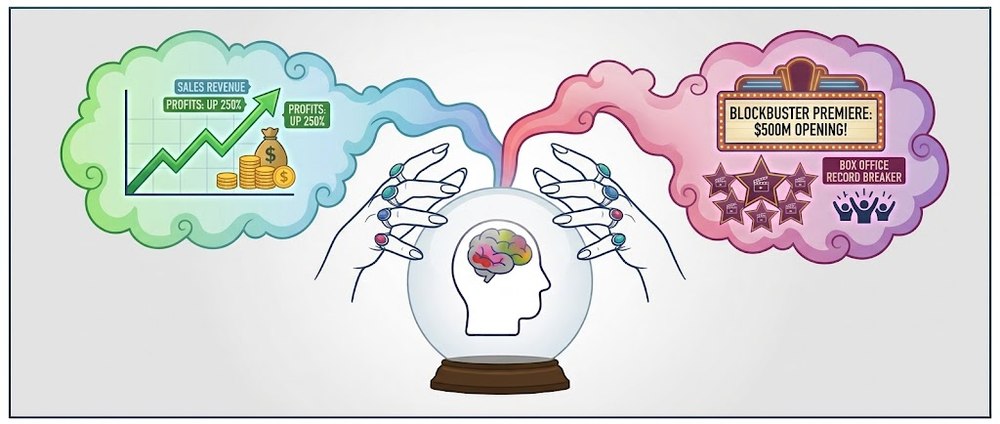
Is it possible to predict whether a movie will be a hit, an ad will go viral or a health campaign will make people quit smoking, before it ever reaches the public? And what if the best predictor is not what people tell you, but what their brains are doing?
Imagine you run a Hollywood studio. You have twenty finished films waiting to be released, and you have a marketing budget that will only stretch to pushing a handful of them really hard. Which ones do you pick? Which of these films will people flock to, and which will quietly disappear from the cinemas after two weeks?
If this sounds like an easy question, you are in for a disappointment. The screenwriter William Goldman famously summed up the film industry’s ability to predict a hit in three words: “Nobody knows anything.” Studios run test screenings, they survey audiences and they ask focus groups what they thought of the trailer, and still they regularly pour millions into films that nobody goes to see, while some small film that nobody believed in becomes the surprise hit of the year.
And the film industry is not alone. The same problem plays out every day in marketing: which of these three commercials should we put on air? Which version of our new product will people actually buy? And outside of business, too: which anti-smoking campaign will make the most people pick up the phone and call the quit line? In all of these cases you want to know, before you spend the money, how millions of people are going to respond. And in all of these cases, the usual way to find out is to ask a small group of people what they think, and hope that their answers say something about everyone else.
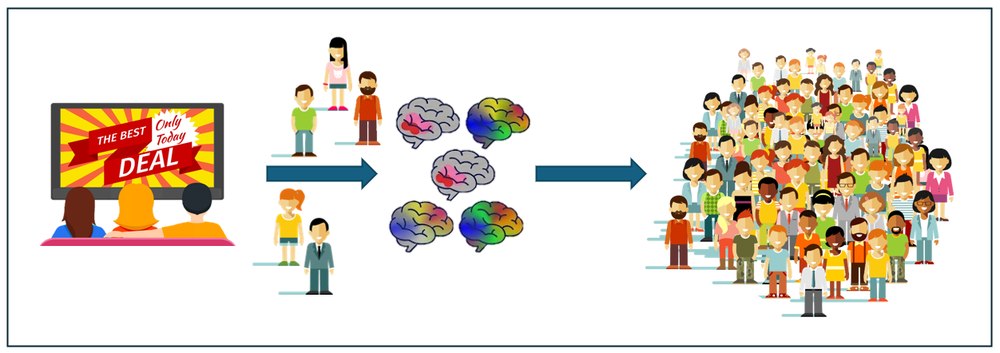
The trouble is that they often don’t. So we (myself and my colleague Ale Smidts) have been trying a different route. Rather than asking a small group of people what they think, we look at what their brains are doing, and use that to predict how the market at large will respond. This is called neuroforecasting, and it works better than you might expect.
Thirty-two Dutch students and the American box office
Let’s start with the movies. Film trailers are, in a sense, the perfect testing ground for this idea. Films are advertised mainly through their trailers, and trailers strongly influence which films people decide to go and see; you could even argue that a trailer is a kind of free sample of the product. But the most important advantage is that, for films, commercial success is out there for everybody to see: box office figures (how much money a film makes from ticket sales) are publicly available, and they are directly linked to the ad, the trailer, that people saw.
So in one of our studies, we had 32 participants watch the trailers of 18 movies while we recorded their brain activity with EEG (electroencephalography: electrodes on the scalp that pick up the brain’s electrical activity) (Boksem & Smidts, 2015). For each trailer, we also asked participants how much they liked the film and how much they would be willing to pay to see it.
What we found was that a particular kind of fast brain activity during the trailer (for the neuroscientific connoisseurs: oscillations in the gamma band, above 60 Hz) was associated with how well the film did at the US box office. The stronger this activity, the more tickets were sold. And the answers our participants gave us, about how much they liked the film and what they would pay for it? Those did not predict box office success at all.
Now consider for a moment who these participants were: students at Erasmus University in Rotterdam. So the brain activity of a few dozen Dutch students, watching trailers in a lab, said something about how many Americans would go out and buy a ticket for these films, while their own opinions did not. We are now repeating this study with a much larger set of films and a considerably larger group of participants, and so far we see the same relationship between brain activity and box office. That gives us some more confidence that our finding was not a fluke.
When brains tick in sync
How can that be? One idea is that what matters is not so much what happens in any one person’s brain, but how similar the brain responses of different people are.
Think about it this way. When a video is really gripping, it grabs everyone’s attention in the same way at the same moments: everybody gasps at the same time, laughs at the same joke and holds their breath at the same cliffhanger. So their brains respond in much the same way as well. But when a video is boring, people’s minds start to wander, each in their own direction. One person starts thinking about dinner, another about that email they still need to send, and a third is checking their phone. Their brain responses drift apart.
And this synchrony between brains turns out to be a surprisingly good predictor of success. In a study that took EEG out of the lab and into an actual movie theater, researchers fitted moviegoers with mobile EEG caps while they watched trailers among the regular audience. The more the brains of the people in the audience synchronized during a trailer, the better the corresponding film sold months later (Barnett & Cerf, 2017).
A few years earlier, a team in New York had already found something similar. The extent to which the brains of a small group of viewers responded in sync to an episode of The Walking Dead predicted how much people tweeted about the episode while it was being broadcast, and the same measure predicted how the general public rated the commercials aired during the Super Bowl (Dmochowski et al., 2014).

We found the same thing with fMRI in our own lab (Chan et al., 2019). The more similar the brain responses that a TV commercial evoked across our participants, the more they liked the commercial and the better they remembered it. And importantly, this was not just true for the people in our scanner: the commercials that synchronized our participants’ brains were also better remembered by consumers in the market at large. So the degree to which a commercial gets brains to tick in sync may well be a very useful measure for testing commercials before they go on air.
The applause meter
Most neuroforecasting research has not used EEG or synchronicity, but brain activation measured with fMRI (functional magnetic resonance imaging, the large scanner that tracks where in the brain blood is flowing), and it keeps pointing to one particular part of the brain: the valuation system. This network registers how valuable or rewarding something is to us, whether that is food, money, a nice car or a good song. Two areas in particular keep popping up: the nucleus accumbens, deep in the middle of the brain, and the medial prefrontal cortex, just behind your forehead. You can think of this system as the brain's applause meter, like the ones on old TV talent shows: the more something delights us, the further the needle swings.
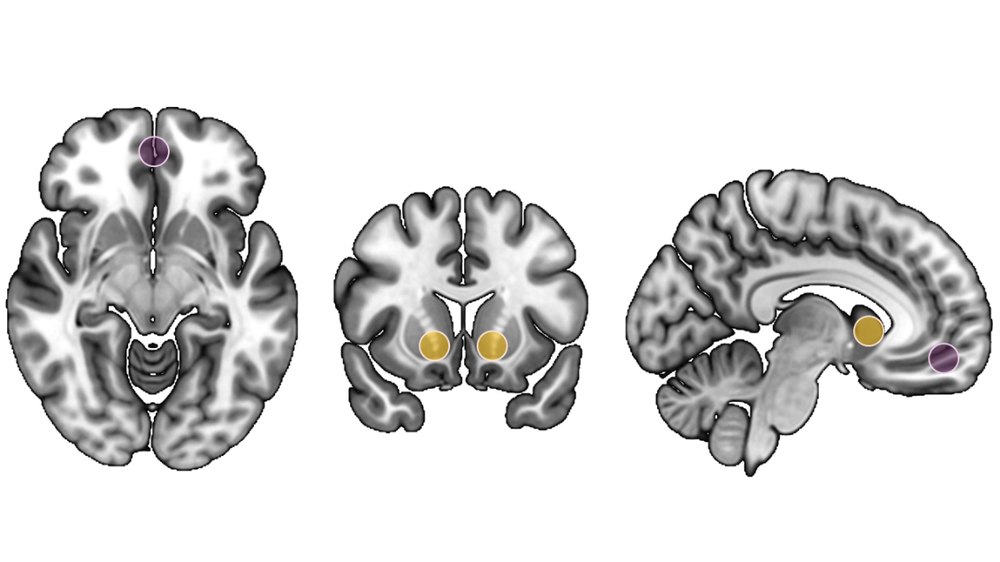
One of the first studies to show that this price tag can predict what the market does involved pop music (Berns & Moore, 2012). Back in 2006, researchers scanned 27 teenagers while they listened to 120 songs by relatively unknown artists, mostly found on MySpace (remember MySpace?). It was originally a study about something else entirely. But three years later, the lead researcher, Gregory Berns, heard an American Idol contestant sing “Apologize” by OneRepublic, a song that had been in the study, and he wondered: could the teenagers’ brains have known? So they looked up how many copies each song had sold over the next three years. And indeed: activity in the valuation system (how much brain applause the songs got) while listening predicted sales. How much the teenagers said they liked the songs did not.
Around the same time, Emily Falk and her colleagues tried the same trick with public health messages (Falk et al., 2012). They showed 30 smokers TV ads from three different campaigns encouraging people to call the National Cancer Institute’s hotline for help with quitting. Here, success was measured by how many calls the hotline received after each campaign went on air, and the differences were huge: one campaign doubled the number of calls, another increased it tenfold, and the third thirtyfold. Activity in the medial prefrontal cortex correctly predicted this ranking. And the smokers themselves, and the communication experts? They got it exactly the wrong way around.
Later studies extended this to all kinds of things. Alexander Genevsky and his colleagues, for example, showed people descriptions of real Kickstarter projects in the scanner and asked them whether they would want to fund them (Genevsky et al., 2017). Months later, they checked which projects had actually reached their funding goal on the internet. Again, activity in the nucleus accumbens predicted which projects would succeed, whereas people’s own ratings did not. By now, similar results have been reported for microloans, the effect of TV advertising on sales, click-through rates of online ads, YouTube views, the number of times news articles are shared, and even which new products will succeed in the supermarket before they hit the shelves.
So what does this all mean? That the success of messages, commercials and products in the market can, at least to some extent, be predicted from the brains of a small group of people in a lab. And that this often adds something to what those same people tell us, and sometimes even beats it. That is of course very valuable for practice: you could test ads, campaigns or products in a small group before they are launched, and pick the winners.
Why does it work?
But that still leaves the most interesting question unanswered: why? What is it about some messages that makes them succeed? Knowing that a certain part of the brain becomes active doesn’t tell you what you should change about your ad.
A first clue comes, again, from research on smoking. We all know that a message works better when it feels as if it is about you. So health researchers have long been “tailoring” their messages to the individual: rather than “Smoking is bad for your health”, you get “John, as a father of two, you’ll want to be around to see your kids grow up.” And it turns out that these tailored messages activate a very specific network in the brain: the network we use when we think about ourselves (the medial prefrontal cortex again, and an area called the precuneus).
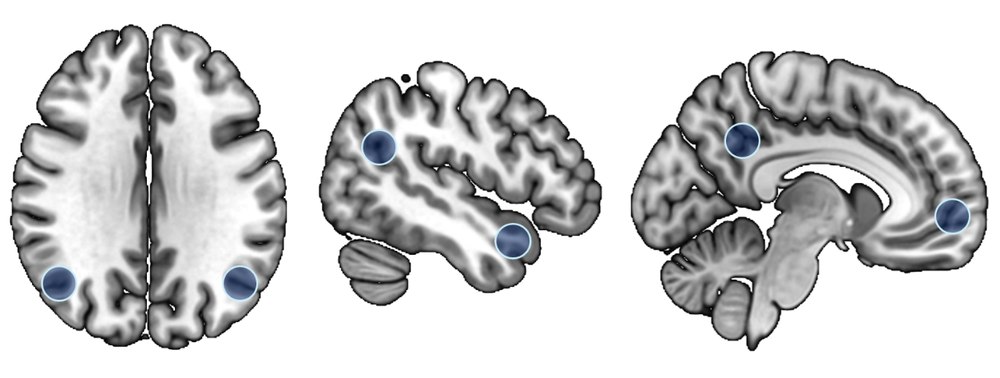
In a clever study, Hannah Faye Chua and her colleagues first had 87 smokers do a simple task in the scanner to map out exactly where in each person’s brain this “self network” sits (Chua et al., 2011). Participants saw words like “lazy” or “generous” on a screen and simply had to say whether the word described them or not. Then, still in the scanner, the smokers read a series of anti-smoking messages. Four months later, the researchers called them up to ask whether they had quit. And the more the messages had activated their self network, the more likely they were to have kicked the habit.
Emily Falk and her team then took this one step further, from individuals to the population (Falk et al., 2016). They scanned 50 smokers while they looked at 40 different anti-smoking ads, and used the same “self” task to pinpoint the relevant part of the medial prefrontal cortex. The same ads were then sent out in an email campaign to hundreds of thousands of smokers in New York, and the researchers counted how often people clicked on the link to the quit-smoking website: from about 10% for the least effective images to 26% for the most effective ones. The images that activated the self network most in the 50 smokers in the scanner were the ones that got the most clicks from the population at large.
So the reason why some messages are more persuasive than others, at least in part, seems to be that they are more self-relevant: they “resonate” with people. It is however important to realize that this is not the whole story. The part of the brain that deals with the self overlaps quite a lot with the part that contains the “applause meter” (compare Figures 3 and 4). So when we see that area light up, is it because the message feels relevant to you, or because it feels valuable to you? That is hard to tell apart. And of course, the two are not mutually exclusive: what resonates with who we are is probably also something we value.
Does it hold up?
One thing you may notice when you examine academic literature on neuroforecasting is that different studies point to different parts of the brain. Sometimes it’s the nucleus accumbens that predicts success, sometimes the medial prefrontal cortex, and sometimes something else entirely. That is a bit worrying. If every study finds a different predictor, how do we know that the next ad, or the next product, will follow the same rules?
To answer that question, we joined forces with researchers around the world in a large international project, in which we pooled the data of all the neuroforecasting studies we could get our hands on. This kind of study is called a mega-analysis. In the end, it combined 16 neuroimaging studies, with 572 participants and 739 different persuasive messages: commercials, health campaigns, news articles and more (Scholz et al., 2025).
And yes, a consistent picture emerged. Across all those different messages and outcomes, activity in two systems predicted how effective a message was: the reward system (including our old friend, the nucleus accumbens) and the brain’s mentalizing system, which strongly overlaps with the self-referential system mentioned earlier, but is also involved in thinking about what others are thinking about. What’s more, activity in the mentalizing system predicted population-level success beyond what participants themselves told us. In other words, the brain picked up something about these messages that people did not report.
It must be said that the effect was modest: brain activity explained a small, but robust, part of why some messages work better than others. But it was there, across studies, messages and outcomes. That is a lot more convincing than any single study could ever be.
“Can you really not just ask people?”
When I talk about this research, the first question I usually get is: why go to all this trouble? Can you really not just ask people?
And the honest answer is: often you can. Decades of marketing research have shown that simply asking people what they think does quite a good job of predicting what they will do. Nobody is suggesting we throw all those surveys away. But there are situations where asking falls short. Sometimes people don’t really know why they like something, or find it hard to put into words. Sometimes a message is about something they would rather not talk about honestly, like their smoking habit. And even when people can tell you whether they like something, they are much worse at telling you how much. You can say that a commercial is “quite good”, but is it 6.5 or 7.2 out of 10? The brain doesn’t round off to the nearest whole number: its signal is continuous, so it may be better at picking up those differences in intensity.
“So should every company buy a scanner?”
The second question usually comes from people in industry: so should we all get a scanner? Well, no. There are still plenty of caveats.
First, the number of neuroforecasting studies is growing, but it is still limited, and many of the samples are small. We need more replications, and especially more studies that test whether predictions hold up for completely new products and messages. Second, most studies looked only at a few brain areas chosen in advance, which may explain why they sometimes disagree, and may have caused them to miss important signals elsewhere in the brain. Third, as we saw, we still don’t fully understand why neuroforecasting works. And finally, it is quite likely that brain data help more in some situations than in others. Presumably, they add the most when people find it hard to say how much they like something, and the least when that is easy. But nobody has properly tested that yet.
So I don’t think “neuro” measures are going to replace the traditional ones any time soon. But they do seem to make a useful addition to the marketer’s toolbox. Picture a “neuro focus group”: a small group of people whose brain responses to your new campaign are measured before you launch it, to tell you which version is most likely to work in the market. For a campaign worth millions, or a health message that could save lives, that is a very real possibility.
Nobody knows anything?
So, back to our Hollywood studio. You still have twenty films and a budget for a handful of them. Was William Goldman right? Does nobody know anything?
Perhaps nobody consciously knows anything. Ask a group of people which film they want to see and their answers will tell you surprisingly little about what millions of others are going to do. But somewhere in their brains, it seems, there is a bit more knowledge than they let on. Maybe the next time you want to know whether you have a hit on your hands, you shouldn’t ask your audience. Ask their brains instead!
References
- Barnett, S. B., & Cerf, M. (2017). A ticket for your thoughts: Method for predicting content recall and sales using neural similarity of moviegoers. Journal of Consumer Research, 44(1), 160–181. https://doi.org/10.1093/jcr/ucw083
- Berns, G. S., & Moore, S. E. (2012). A neural predictor of cultural popularity. Journal of Consumer Psychology, 22(1), 154–160. https://doi.org/10.1016/j.jcps.2011.05.001
- Boksem, M. A. S., & Smidts, A. (2015). Brain responses to movie trailers predict individual preferences for movies and their population-wide commercial success. Journal of Marketing Research, 52(4), 482–492. https://doi.org/10.1509/jmr.13.0572
- Chan, H.-Y., Smidts, A., Schoots, V. C., Dietvorst, R. C., & Boksem, M. A. S. (2019). Neural similarity at temporal lobe and cerebellum predicts out-of-sample preference and recall for video stimuli. NeuroImage, 197, 391–401. https://doi.org/10.1016/j.neuroimage.2019.04.076
- Chua, H. F., Ho, S. S., Jasinska, A. J., Polk, T. A., Welsh, R. C., Liberzon, I., & Strecher, V. J. (2011). Self-related neural response to tailored smoking-cessation messages predicts quitting. Nature Neuroscience, 14(4), 426–427. https://doi.org/10.1038/nn.2761
- Dmochowski, J. P., Bezdek, M. A., Abelson, B. P., Johnson, J. S., Schumacher, E. H., & Parra, L. C. (2014). Audience preferences are predicted by temporal reliability of neural processing. Nature Communications, 5, Article 4567. https://doi.org/10.1038/ncomms5567
- Falk, E. B., Berkman, E. T., & Lieberman, M. D. (2012). From neural responses to population behavior: Neural focus group predicts population-level media effects. Psychological Science, 23(5), 439–445. https://doi.org/10.1177/0956797611434964
- Falk, E. B., O’Donnell, M. B., Tompson, S., Gonzalez, R., Dal Cin, S., Strecher, V., Cummings, K. M., & An, L. (2016). Functional brain imaging predicts public health campaign success. Social Cognitive and Affective Neuroscience, 11(2), 204–214. https://doi.org/10.1093/scan/nsv108
- Genevsky, A., Yoon, C., & Knutson, B. (2017). When brain beats behavior: Neuroforecasting crowdfunding outcomes. Journal of Neuroscience, 37(36), 8625–8634. https://doi.org/10.1523/JNEUROSCI.1633-16.2017
- Scholz, C., Chan, H.-Y., Ahn, J., Boksem, M. A. S., Cooper, N., Coronel, J. C., Dore, B. P., Genevsky, A., Huskey, R., Kang, Y., Knutson, B., Lieberman, M. D., O’Donnell, M., Resnick, A., Smidts, A., Venkatraman, V., Vo, K., Weber, R., Yoon, C., & Falk, E. B. (2025). Brain activity explains message effectiveness: A mega-analysis of 16 neuroimaging studies. PNAS Nexus, 4(11), Article pgaf287. https://doi.org/10.1093/pnasnexus/pgaf287