Welcome

Welcome to my personal website. It is mainly a repository for my papers, but increasingly also for the data and code supporting these papers.
I have a broad interest in human behaviour and in how the brain orchestrates this behaviour. My current research topics range from the decoding of psychological processes from the brain, to investigating brain responses with naturalistic stimuli (movies), to the neural underpinnings of cheating and deception, and to the role of context in decision-making. These research lines are outlined briefly below. Past lines of research include the role of hormones in behaviour and brain processes, the neural substates of emotions, goal-directed motivation and their control, performance monitoring and the impact of fatigue on cognition.
Cheating, unfairness and deception
Dishonest behaviour, such as tax evasion, music piracy or
fraud, is highly prevalent in our society and inflicts huge
economic costs. Every day, we are faced with the conflict
between the temptation to cheat and deceive for financial
gains and maintaining a positive image of ourselves as being a
‘good person’. In this line of research, we investigate the
psychological and neural underpinnings of decisions to either
cheat and deceive, or to remain fair and honest.
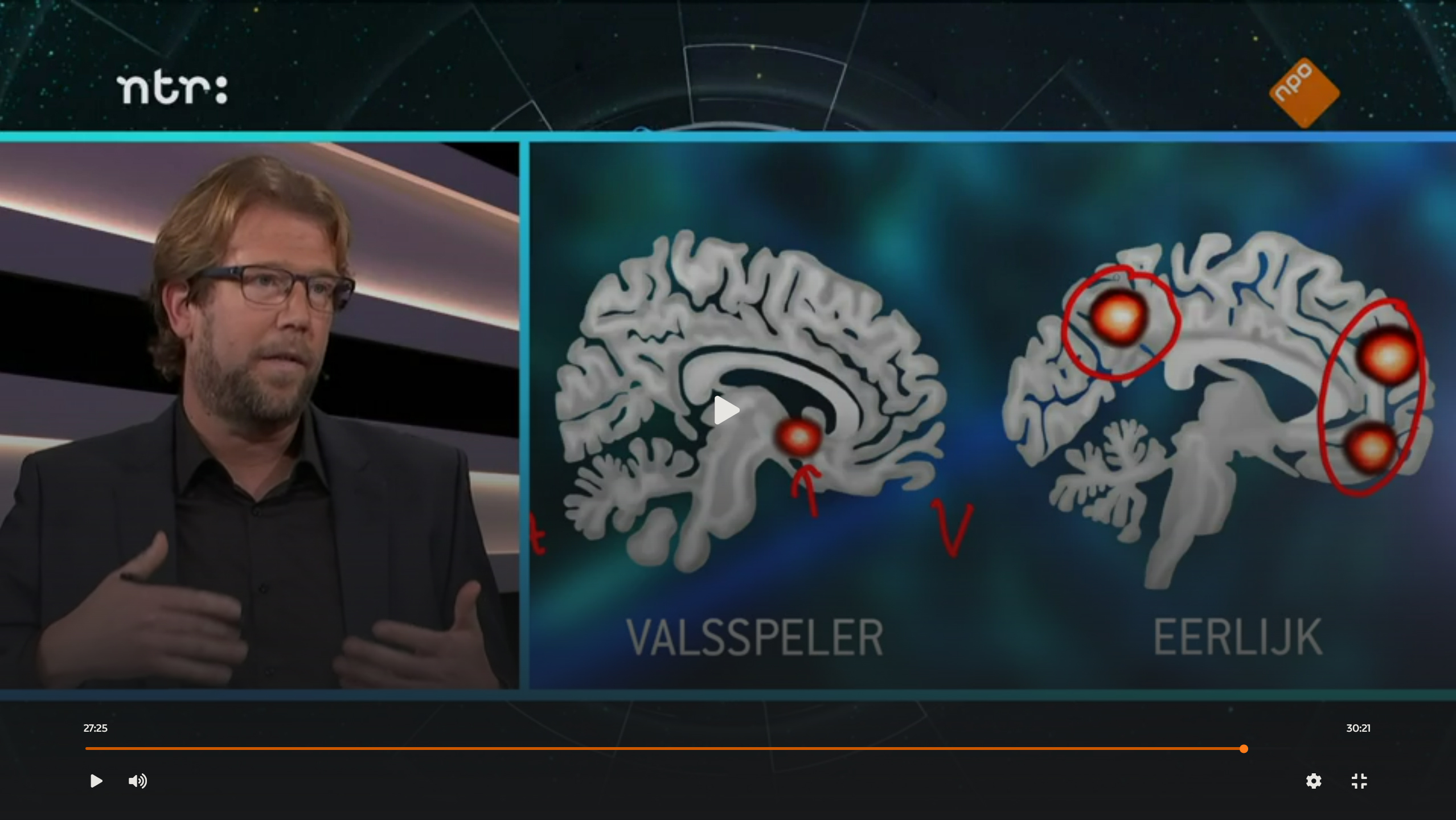
We find that particularly individual differences in the
engagement of cognitive control and theory of mind drive
decisions to be fair and honest (or not). For example, in one
study we found that cognitive control may override an
individual’s moral default, allowing honest people to cheat,
whereas it enables cheaters to be honest. These insights
contribute to a deeper understanding of individual differences
in honesty and may aid in developing more targeted
interventions aiming at reducing dishonesty.
Decoding psychological processes from the brain
The human psyche pretty much remains a black box: we can
observe or even manipulate the input a person’s psychological
system receives, but not the feelings or cognitive processes
that are evoked by this input. Likewise, we can observe the
decisions made by the system, but not the feelings or
cognitive processes that drove these decisions. In this line
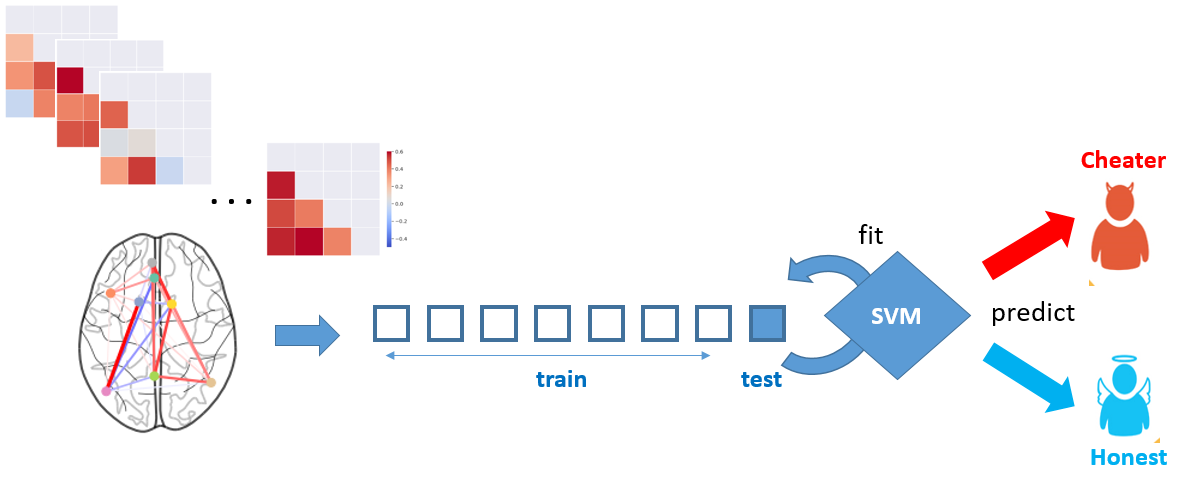
of research, we decode these latent processes or states from
the brain, using machine learning methods applied to
distributed pattern of brain activity.
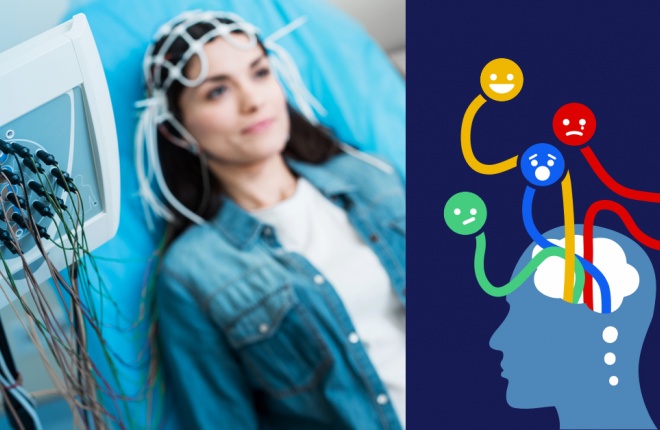
For example, in two studies (one using EEG, and one using
fMRI), we presented participants with video content while
measuring activity from their brains. Using machine learning,
we trained classifiers to accurately decode the emotional
experience evoked by these videos in our participants. As
another example, in every-day life we observe large
differences in honesty and fairness across individuals. In a
set of two studies (using fMRI), we decode idiosyncrasies in
the underlying motivations for honesty and fairness. We find
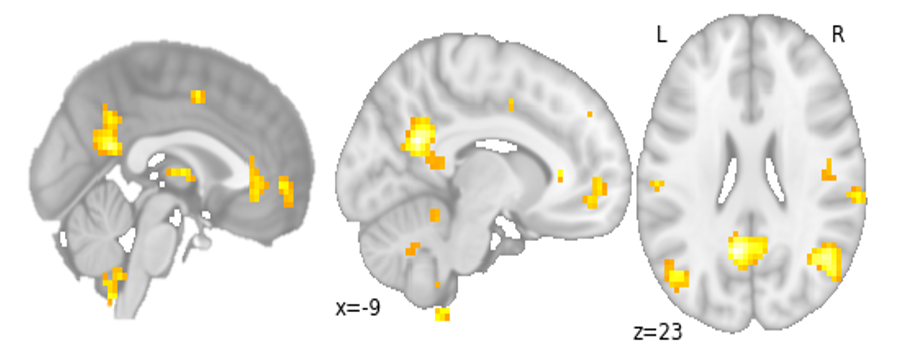
that particularly individual differences in the engagement of
cognitive control and theory of mind drive differences in
prosocial behaviour.
Brains at the movies
In the past, research in neuroscience has used
decontextualized stimuli and highly artificial experimental
designs to study the neural substrate of cognitive processes.
Although this approach has been very successful, as it allows
for tightly controlled experiments and straightforward
interpretation of results, it has left open the question of
how the brain responds to events in more naturalistic
settings. In this line of research, we address this issue by
investigating how brain processes unfold during movie
watching.
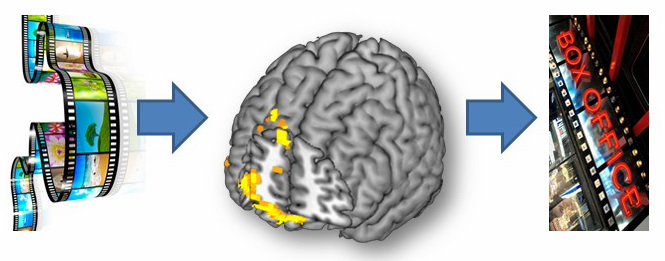
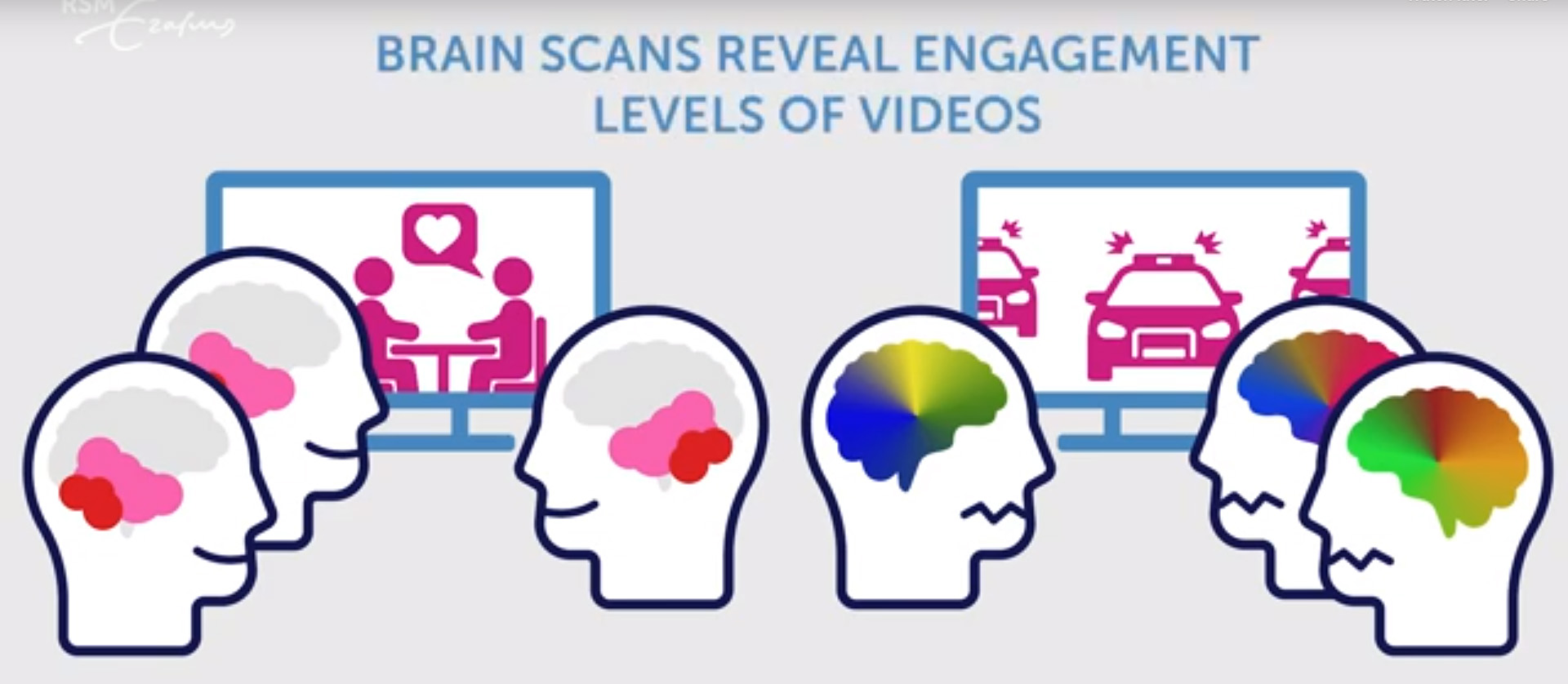
We find that we can track emotions, engagement and preference
that follow the narrative of the presented videos. In
addition, we observe that we can not only predict how well
individual participants will like the movie they are watching,
but also how well others will like this movie. That is, we can
predict, from brain activity measured during movie-watching in
a small set of participants, to what extent a different set of
participants will like this movie, and even estimate how well
the movie will do at the box office.